

India's NPCI Launches UAP Protocol: First National Payment System Builds Native Payment Channel for AI Agents
The National Payments Corporation of India has introduced the UAP protocol, enabling AI agents to initiate UPI transactions directly. This is the world's first native protocol for machine-to-machine payments on a national retail payment system, standing in contrast to decentralized solutions like x402 and ACP.
Key Takeaways
India's National Payments Corporation (NPCI) launched the Unified Agentic Payments (UAP) protocol in July 2026, enabling AI agents to initiate and receive payments within the UPI network. According to NPCI's announcement, the protocol is an extension layer for the Unified Payments Interface (UPI) specifically designed for machine-to-machine (M2M) scenarios. Initial pilots cover high-frequency automated use cases such as e-commerce fulfillment, logistics scheduling, and digital content procurement.
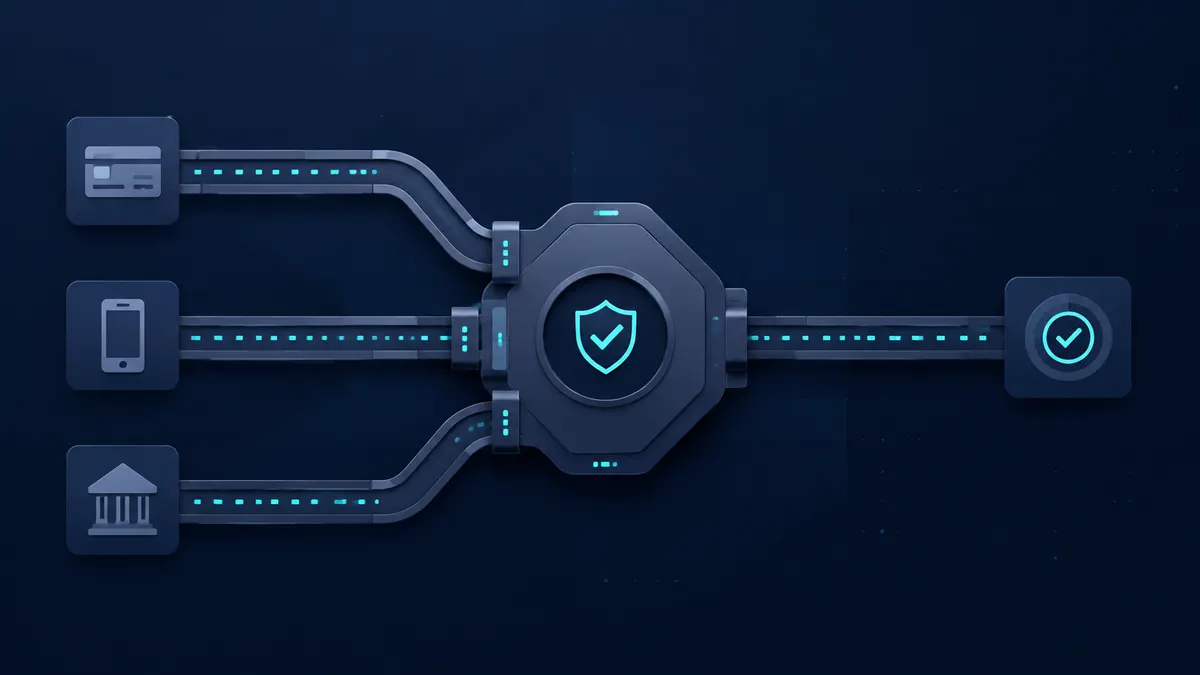
The core design of UAP: AI agents obtain limited payment permissions through UPI's mandate mechanism. Each transaction is still processed in real-time by NPCI's central clearing system, with funds ultimately settled between bank accounts. This aligns with UPI's existing architecture — agents do not hold funds but act solely as instruction initiators.
Background: India's UPI Ecosystem and the Rise of AI Agent Payments
The Unified Payments Interface (UPI) is the backbone of India's retail payments, launched by NPCI in 2016. By enabling real-time interbank transfers via mobile devices, it has dramatically accelerated digital payment adoption in India. According to NPCI public data, as of mid-2026, UPI covers over 300 million users and 50 million merchants, with monthly transactions consistently exceeding 10 billion, making it one of the largest real-time payment systems globally. This infrastructure's low cost and high penetration provide a natural testing ground for AI agent payments.
Meanwhile, AI agents are evolving from conversational interfaces to action execution, particularly in e-commerce, logistics, and content distribution. Machine-driven automated decision-making requires built-in payment capabilities. Traditional payment gateways are designed for human operations, requiring manual confirmation or preset static rules for each transaction, which fails to meet the dynamic, high-frequency, continuous payment needs of agents. In this context, NPCI extends UPI's mandate mechanism to the agent layer, attempting to build a compliant channel for machine payments without altering the underlying bank clearing process.
Key Facts
- Issuer: National Payments Corporation of India (NPCI), the retail payment infrastructure operator under the Reserve Bank of India (RBI).
- Protocol Name: Unified Agentic Payments (UAP), as an extension layer of UPI.
- Use Cases: Automated payments initiated by AI agents, including e-commerce auto-replenishment, logistics freight settlement, pay-per-use digital content, etc.
- Technical Path: Based on UPI's existing mandate and payee allowlist mechanisms. Agents must be linked to a bank account with preset per-transaction limits and daily cumulative caps.
- Settlement Method: Centralized clearing — all transactions are processed in real-time through NPCI's central system, with funds moving between bank accounts, involving no on-chain settlement or stablecoins.
- Regulatory Framework: Subject to the RBI's current Payment and Settlement Systems Act (PSS Act). Agent payment behavior falls under "payment instruction initiation," requiring no additional license.
Industry Chain and Business Model Impact
The launch of UAP will redefine the roles of participants in the AI agent payment ecosystem:
- Banks and Payment Service Providers: Third-party application providers (TPAPs) in the UPI ecosystem — such as PhonePe, Google Pay, and Paytm — will need to integrate UAP's mandate management interfaces into their apps to offer payment authorization and limit-setting functions for agents. Banks as account holders will also be forced to upgrade risk control systems to identify and monitor non-human-initiated payment behaviors.
- AI Agent Infrastructure Providers: Agent frameworks like LangChain and AutoGPT will need to encapsulate UAP's API calls, enabling developers to grant payment capability to agents with minimal code. This will drive standardization of agent payment modules — at least for the Indian market.
- Merchants and Platforms: E-commerce platforms (e.g., Flipkart, Amazon India) can allow AI agents to directly manage purchase orders and payments, reducing manual overhead; logistics platforms can dispatch on demand and settle freight automatically, improving efficiency. However, merchant-side receiving accounts must still be UPI-compatible bank accounts, maintaining the existing merchant onboarding logic.
- Regulatory and Compliance Technology: New compliance requirements may emerge — the audit trail of agent actions must be clear to ensure each payment is traceable to a specific agent, task, and target. NPCI's central clearing logs naturally provide transaction-level tracing, but transparency of agent decision logic will require additional solutions.
Our Analysis
OceanAlt believes that UAP marks the first time a national payment network has designed a native protocol for AI agents, but its path fundamentally differs from decentralized solutions like x402 and ACP.
Centralized Clearing vs. On-Chain Settlement
UAP continues UPI's centralized clearing model: NPCI serves as the sole clearing node, responsible for transaction verification, limit control, and final settlement. This means every agent payment passes through a central ledger, allowing regulators to track fund flows in real time. In contrast, x402 is based on HTTP 402 protocol and stablecoin on-chain settlement, where transaction verification is performed by distributed nodes and funds are atomically exchanged in smart contracts.
Each path has trade-offs: the centralized approach offers stronger compliance certainty — all transactions remain under regulatory oversight — but sacrifices censorship resistance and global liquidity. We judge that for a single-jurisdiction market, centralized clearing better aligns with Indian financial regulatory logic; however, for cross-border M2M payments, the interoperability advantages of on-chain settlement become more prominent.
Can UPI's Scale Effect Accelerate Agent Payment Standardization?
UPI already has a massive user and merchant base in India. UAP directly leverages this infrastructure, meaning AI agent payments can immediately reach all existing UPI ecosystem participants without building a new user network. This "existing stock conversion" strategy may achieve scale faster than building a decentralized payment network from scratch.
However, we judge that UAP's standardization capability is limited by UPI's closed architecture — protocol specifications are set and updated unilaterally by NPCI, and third-party developers cannot drive protocol improvements through open-source communities as they can with x402 or ACP. This may make UAP a "de facto standard" in India, but unlikely to become a universal protocol for global agent payments.
Compliance and Security: The Absence of KYA and the Need for Pre-Settlement Interception
UAP's mandate mechanism requires agents to be linked to a bank account with preset limits, which to some extent addresses the "who is paying" question — agent identity can be traced to its linked bank account. However, the mechanism has not yet introduced a "Know Your Agent" (KYA) concept: the code integrity of the agent and behavioral compliance (e.g., adherence to sanction lists, involvement with mixer taint) are not verified.
For OceanAlt's focus on pre-settlement firewalls, UAP's central clearing system inherently has transaction interception capability — NPCI can reject payments before they reach banks based on preset rules. However, this capability is currently limited to limit control and payee allowlist checks, and has not been extended to on-chain taint screening or sanctions list matching. We judge that as agent payment volumes grow, compliance checks before settlement will evolve from "limit verification" to "behavioral compliance verification." At that point, UAP may need to introduce mechanisms similar to KYA to ensure that agent execution complies with anti-money laundering and anti-sanctions requirements.
International Perspective and Future Outlook
As a sovereign national agent payment solution, UAP provides a reference for other central banks looking to expand AI regulation. For example, China's digital yuan (e-CNY) already has smart contract capabilities for directed payments, and Europe's TARGET Instant Payment Settlement (TIPS) system may explore similar agent interfaces. However, compliance requirements vary greatly across jurisdictions, making it difficult to directly replicate a single country's protocol.
We judge that UAP may stimulate other high-penetration payment systems to follow suit in the short term, but in the medium to long term, a complementary landscape will emerge: centralized agent payments (like UAP) for retail, small-value, regulated-jurisdiction scenarios; decentralized agent payments (like x402/ACP) for cross-border, large-value, or censorship-resistant scenarios. Interoperability bridges between the two — such as connecting centralized bank ledgers via stablecoins — will become an important infrastructure challenge.
Who Is Affected
- Cross-border enterprises: If operating e-commerce, logistics, or digital content businesses in India, companies need to pay attention to UAP's integration requirements — agent payments must be linked to Indian bank accounts and are subject to UPI daily transaction limits (currently about 100,000 INR per transaction). For cross-border scenarios, UAP currently does not support agent payments from non-Indian bank accounts; cross-border enterprises will still need to rely on stablecoins or traditional cross-border payment channels.
- AI Agent developers: UAP offers "plug-and-play" payment capability — developers only need to call UPI's mandate API to let agents initiate payments, without handling on-chain gas fees or private key management. The trade-off is that agent payment behavior is entirely subject to NPCI rules, including transaction limits, payee whitelists, and transaction time windows.
- Payments and compliance professionals: UAP's launch validates the feasibility of "national payment networks designing native protocols for agents," potentially prompting other central banks or payment systems to follow. However, the debate between centralized clearing and on-chain settlement will intensify — compliance professionals need to assess the pros and cons of both paths in terms of anti-money laundering, sanctions screening, and cross-border interoperability.
Conclusion
OceanAlt believes that UAP gives AI agent payments a legal identity in India — one of the world's largest real-time payment markets. However, its centralized clearing DNA makes it more suitable for controlled scenarios within a single jurisdiction. When agent payments cross borders or require censorship resistance, the on-chain paths of x402 and ACP remain irreplaceable options.
Provenance & status
- Byline
- OceanAlt Editorial
- First published
- 2026-07-24
- Last updated
- 2026-08-14
- Source material
- Source not labeled
Related reading

Visa and Mastercard Join Ant International on a KYA Interoperability Framework as Agent Identity Standards Begin to Converge

Félix Raises $200M Led by a16z: Stablecoin Infrastructure Shifts from Remittances to Agent Economy Settlement

U.S. Congress Holds First Hearing on AI Agent Payment Rules: Authorization, Settlement, and Identity Take Center Stage
Paste a payee address before you pay and see whether it's on a sanctions list, through a mixer, or tagged for fraud.
This judgement can sit inside your own product
One line of code; it touches neither your CSS nor your JS. The same pre-settlement judgement can appear in your articles, on your wallet's confirmation screen, or as an endpoint your agent calls before it pays.