

Kite Teams Up with Circle: Agent Service Transactions Plug Into USDC Settlement Layer
Kite and Circle are exploring USDC settlement of AI agent service transactions on the Arc network, pushing compliance checks like "who pays whom" down to the protocol layer.
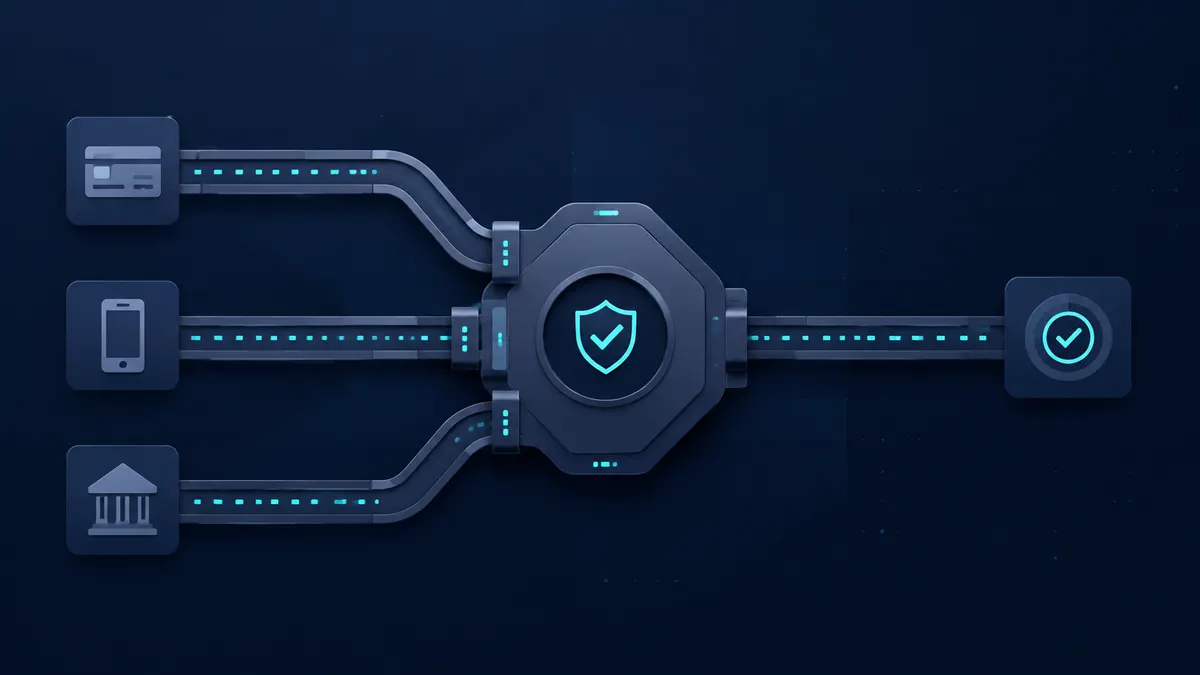
AI agent payment protocol Kite has partnered with stablecoin issuer Circle to explore pricing and USDC settlement of AI agent service transactions on Circle's Arc network. According to BlockBeats, the collaboration targets the full chain of agent-to-agent service payments in stablecoins—from service discovery and quoting to final clearing and settlement.
Two layers that previously operated in silos
Kite builds agent payment protocols, solving "how a machine initiates a verifiable payment intent to another machine"; Circle's Arc is on-chain infrastructure for stablecoin settlement, solving "how the money ultimately lands and in what asset it is denominated." Stacking the two is equivalent to connecting the "order placement" and "payment" of the agent economy into a single pipeline, with USDC serving as the unit of account and settlement within that pipeline.
Why "who is paying" has become a new problem
When the payer is an AI agent rather than a natural person, traditional KYC frameworks break down. Banks and PSPs' compliance processes assume "there is a person standing behind the account," but in agent payment scenarios, the transaction may be initiated by an automated program authorized by a user, making autonomous decisions within preset mandates for per-transaction limits and daily cumulative caps. In this case, the answer to "who is paying" is neither the account holder nor the agent itself, but the authorization relationship between the two. This is precisely the gap that KYA (Know-Your-Agent) aims to fill—bringing the agent's identity, authorization scope, and historical behavior into pre-settlement judgment.
If agent service transactions truly run on Arc and settle in USDC, the pre-settlement firewall has a clear point of application: before funds are transferred, the system can verify the initiating agent's identity credentials, cross-check the recipient whitelist, and confirm whether the transaction falls within the authorized intent. These actions are performed by risk control systems in traditional card network environments, but in agent payment scenarios they need to be redesigned, because transaction frequency, per-transaction amounts, and decision speed are on a different order of magnitude from human payments.
What each side gets out of it
For Circle, connecting Arc to agent payment protocols is a clear strategic extension. Competition among stablecoins has long moved past the "issuance volume" stage; the real moat lies in the density of settlement scenarios—how many real transactions are willing to be denominated and cleared in USDC. If agent service transactions scale, they will generate high-frequency, small-value, 24/7 settlement demand, which is precisely where on-chain stablecoins have a comparative advantage over traditional clearing networks. Circle needs USDC to become the default settlement asset of the agent economy, and protocol partners like Kite are the gateway to reaching this scenario.
For Kite, plugging into Circle's settlement layer solves the most intractable link in agent payments: final fund clearing. Agent payment protocols can be designed elegantly, but if the settlement asset is highly volatile and on/off-ramp channels are congested, merchants and developers will not genuinely adopt them. USDC's compliance attributes and Circle's licensing footprint provide a relatively predictable clearing path for recipients of agent service transactions.
The significance of linking the protocol layer with the settlement layer
This architecture has potential implications for the RAP standard (Revocable Authorization Payment). The core tension in agent payments is: enabling agents to execute autonomously while preserving humans' ability to intervene in abnormal situations. If Kite's protocol layer is deeply coupled with Arc's settlement layer, "revoking authorization" is no longer just a protocol-layer signal—it can trigger actual interception at the settlement layer, freezing the transaction before funds are disbursed. This linkage between protocol and settlement is key to pushing compliance from "post-hoc accountability" toward "pre-emptive interception."
Questions yet to be answered
There is still a distance from partnership announcement to scaled implementation. Arc's actual throughput, the efficiency of USDC on/off-ramps in agent scenarios, and who sets the standards for KYA identity verification are all unanswered questions. But the direction is clear: the payment stack of the agent economy is shifting from "can it pay" to "should it pay, and is it paying correctly," and the combination of stablecoin settlement layers with agent payment protocols is an unavoidable step on this path.
Original source: BlockBeats · https://news.google.com/rss/articles/CBMiVkFVX3lxTE9TTDFZRDBrc1l4RlRqWGF2OS1LcGhmS25vSU1waE54b2c2YUdnb19TbGR1RTlhbmdUeWoxX0R1WlFCX0ItbmJ1RzczYnZ3eUI1OVdUWU13?oc=5
Provenance & status
- Byline
- OceanAlt Editorial
- First published
- 2026-09-20
- Last updated
- 2026-09-20
- Content type
- Original compilation
- Source material
- View original ↗
Related reading

Alchemy Launches AgentCard: AI Agents Can Pay Directly Within Mastercard's Acceptance Network

Consumers Use AI Assistants but Won't Hand Over Their Wallets: Visa Data Reveals the Agent Payment Trust Gap
a16z's Five Charts Break Down Argentina's Stablecoin Reality: Dollarized Payments in an Inflationary Economy Pave the Way for Agent Payments
Paste a payee address before you pay and see whether it's on a sanctions list, through a mixer, or tagged for fraud.
This judgement can sit inside your own product
One line of code; it touches neither your CSS nor your JS. The same pre-settlement judgement can appear in your articles, on your wallet's confirmation screen, or as an endpoint your agent calls before it pays.