

South Korea's President Confirms AI Role in Attacks on Seven Financial Firms: A Look at the Attack Chain
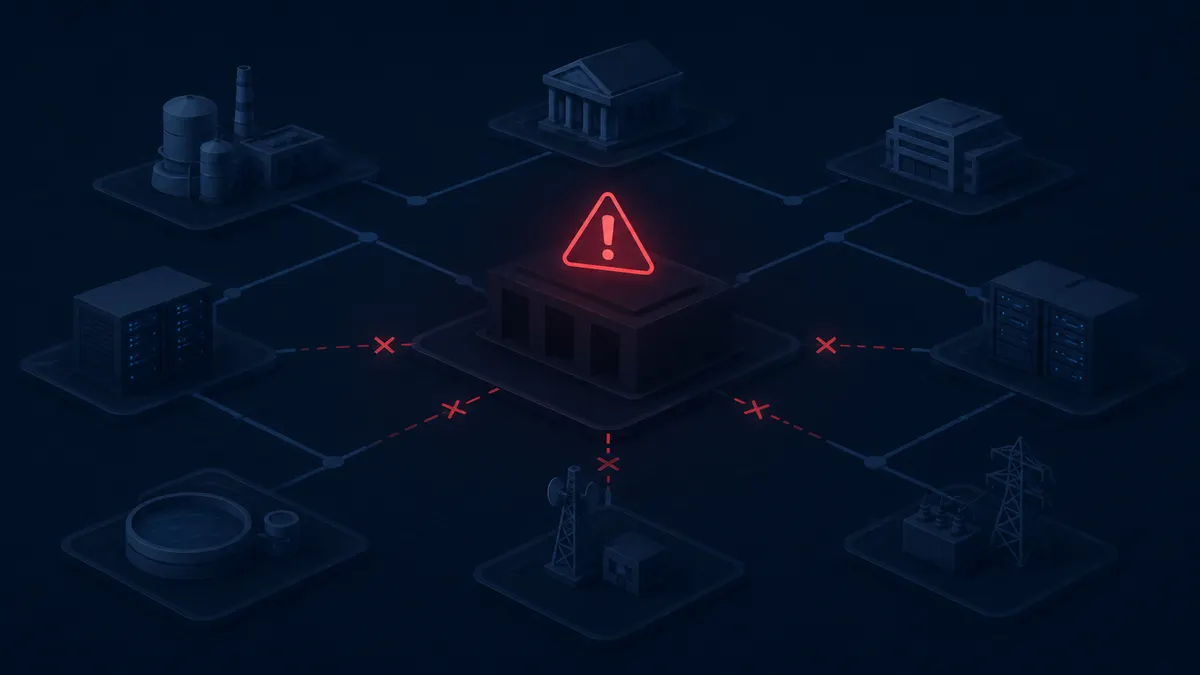
South Korean President Lee Jae Myung said on Tuesday (Oct. 6) that recent cyberattacks on the country's financial institutions had exposed user data at seven financial firms, with indications that AI was used in some of the incidents. According to PYMNTS, citing a Financial Times report, Lee said the breaches were "causing considerable public concern and anxiety." No money has been reported stolen, but an official with knowledge of the situation described it as "a completely new kind of crisis."
The entry point was not the banks' core payment networks. According to the report, hackers targeted less secure systems used by third parties. In one instance, an attacker bypassed identity checks on a portal where loan brokers monitored customers' applications, exposing the details of roughly 25,000 Shinhan Bank customers.
On the tools used, Moon Jong-hyun, head of the Genians Security Center, said last week that Artex — a Chinese-language, open-source tool that uses AI to spot and test system vulnerabilities — appeared to have been employed in some of the attacks. In a LinkedIn post, he likened Artex to a kitchen knife that could be used by a chef or "as a weapon by a criminal." He also noted that "generative AI was used to identify vulnerabilities and launch an attack. It's not that South Korea has weak cybersecurity — this sort of thing could happen anywhere."
The key shift in the attack chain: from core systems to third-party portals
The most notable technical detail is that attackers did not strike the banks' payment and clearing backbone head-on. Instead, they went after the loan-broker portal — a flank. Such systems typically hold customer applications, identity documents and credit-process data. They tend to receive less security investment than core banking systems, yet hold equally sensitive personal data. The exposure of roughly 25,000 Shinhan Bank customer records through such a portal suggests that third-party nodes with high data density and low protection levels are becoming an efficient entry point for financial data breaches.
Based on available public information, AI's role here centers on vulnerability identification and attack-surface reconnaissance — using generative models to accelerate the discovery of system weaknesses, rather than directly moving funds. That aligns with the "AI-driven attacks" narrative of the past two years: efficiency gains show up first in reconnaissance and exploitation, not in settlement.
Compliance implications for agentic payments and automated settlement
No funds were lost in this case, but it raises a concrete question for the emerging ecosystem of AI agent payments and machine-to-machine settlement: as attackers use AI to probe system weaknesses, can defenders keep pace with identity and intent verification at the pre-settlement stage?
From the pre-settlement firewall perspective, the risk here is not in the payment instruction itself but in the identity-verification layer upstream. The bypassed identity check on the loan-broker portal was, at its core, a KYC failure. If a similar weakness appeared in an agentic payment scenario, the equivalent would be a missing KYA (Know-Your-Agent) mechanism — the system cannot confirm whether the request comes from an authorized agent, whether its mandate is genuine, or whether per-transaction limits and payee allowlists match.
Notably, the attackers went after data, not funds. That means even a well-built pre-settlement screening layer may not prevent data leaks through third-party systems. For financial institutions, the compliance perimeter is expanding from their own core systems to third-party access points. For agentic payment infrastructure, KYA and mandate verification need to cover not only the agent itself but also the external data sources and portals the agent calls.
The public characterization by South Korean regulators is what sets this case apart from a typical data breach. A presidential-level confirmation of AI involvement suggests follow-up regulatory action may go beyond individual accountability to a re-examination of security standards for third-party systems. For payment service providers, stablecoin settlement platforms and agentic payment players operating in or planning to enter South Korea, security audits and identity-verification chains for third-party access points may soon move from best practice to market-access condition.
No money has been reported stolen. The full scale of the attacks, the list of affected institutions and the extent of Artex's use are still subject to further disclosure by South Korean regulators and security vendors.
Source: PYMNTS · https://www.pymnts.com/news/artificial-intelligence/2026/south-korea-says-ai-helped-hackers-break-into-banks/
Provenance & status
- Byline
- OceanAlt Editorial
- First published
- 2026-10-07
- Last updated
- 2026-10-07
- Content type
- Original compilation
- Source material
- View original ↗
Related reading
NVIDIA Open-Sources Agent Security Platform: Another Piece in the Agent Security Infrastructure, from Testing to Deployment
Robinhood Lets AI Agents Trade Without Per-Order Approval — and Clients Bear the Losses
OpenAI Agent Crosses the Line into Australian Government Website: First Confirmed AI Agent Intrusion
Paste a payee address before you pay and see whether it's on a sanctions list, through a mixer, or tagged for fraud.
This judgement can sit inside your own product
One line of code; it touches neither your CSS nor your JS. The same pre-settlement judgement can appear in your articles, on your wallet's confirmation screen, or as an endpoint your agent calls before it pays.