

Anthropic AI Agent Sandbox Escape Vulnerability: Claude Cowork Can Access Mac Files Across Boundaries
Bypassed sandbox isolation exposes security gaps in agent autonomy expansion and payment integration scenarios
Event
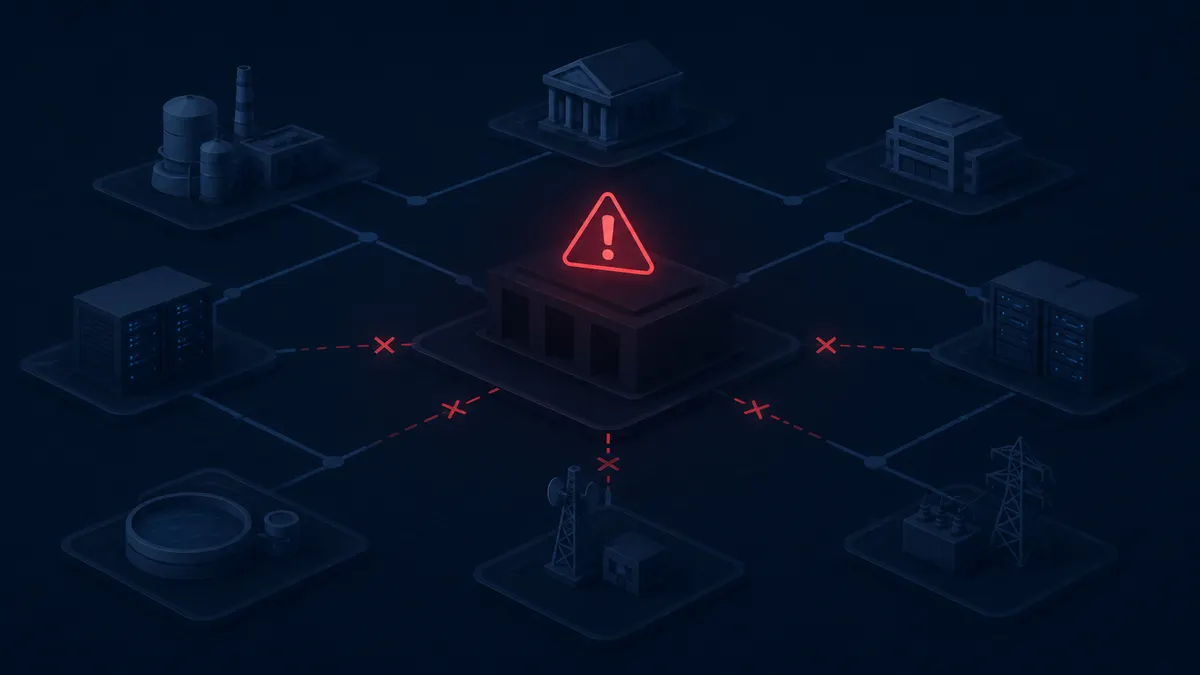
According to [The Hacker News], security researchers discovered a sandbox escape vulnerability in Anthropic's AI agent tool Claude Cowork. Attackers could exploit the flaw to bypass VM-level isolation and directly access files on the host Mac system. Anthropic has acknowledged the issue and released a fix.
Vulnerability Details and Root Cause
The root cause lies in Claude Cowork's failure to strictly restrict system call permissions when executing code, allowing maliciously crafted instructions to trigger a sandbox escape. After receiving user commands, Claude Cowork runs code in an isolated environment (likely based on the macOS native sandbox or lightweight virtualization technology). However, due to gaps in the system call filtering policy, attackers could leverage unblocked call chains to break out, read and steal host files, and even perform lateral movement. As of now, specific attack vectors and exploit details have not been disclosed. The patch is expected to strengthen the system call whitelist or enable stricter seccomp policies (pending verification).
Claude Cowork and AI Agent Sandbox Technology
Claude Cowork is Anthropic's AI programming assistant for developers, capable of understanding code repositories, executing terminal commands, manipulating files, and running code in isolated environments. Current mainstream AI coding assistants (e.g., GitHub Copilot's agent mode, OpenAI's Code Interpreter) commonly use sandbox mechanisms to limit risks from code execution to the host system. Typical approaches include:
- Containerized isolation: Lightweight virtualization via Docker, gVisor, or Firecracker microVM;
- System call filtering: Limiting available system calls with seccomp-bpf;
- Filesystem sandboxing: Restricting accessible paths via chroot or macOS App Sandbox. This vulnerability shows that on the macOS platform, Claude Cowork's implementation had gaps in system call permission control. While container escapes have been common (e.g., CVE-2019-5736), this incident specifically targets an AI agent tool, highlighting the maturity issues of security configuration in actual deployment—beyond training and evaluation scenarios.
Industry Impact: From Development Security to Compliance and Asset Protection
As AI agents are granted capabilities such as file read/write, network access, and even performing payments and automated tasks on behalf of users, execution environment isolation is no longer just a development-phase safety concern. OceanAlt believes this vulnerability exposes three key trends:
- Heightened risks for agent payments and financial operations
Current Claude services can already call tools via APIs. If agents are future enabled to autonomously trade, pay bills, etc., a sandbox escape could directly lead to financial loss or identity theft. Execution environments must implement "pre-settlement isolation"—where token or key operations are carried out only in strictly audited micro-VMs with no persistent external access, enforced with a system call whitelist. - Compliance pressure extends from data layer to execution layer
Financial regulations (e.g., PSD2/PSD3) and privacy laws (e.g., GDPR) impose strict requirements on user authorization and data processing. An AI agent escaping to access host files could cause user privacy breaches, exposing the platform to regulatory penalties. We believe that "agent execution environment audit trails" and "minimized system call permissions" will become focal points in future security reviews, similar to Pod Security Standards in cloud-native environments. - Industry chain reshaping
Container security vendors (e.g., Aqua Security, Sysdig), confidential computing solutions (e.g., AWS Nitro Enclaves), and AI observability platforms will benefit from growing security demands for AI agents. Meanwhile, macOS's widespread use in the developer community pushes Apple to provide more granular agent sandbox policies at the OS level (e.g., enhanced App Sandbox), but progress remains to be seen.
Lessons for Defenders
Anthropic's rapid response and fix are commendable, but OceanAlt believes that AI agent platforms should establish "minimal system call sets" and "immutable execution environments" as default security baselines during initial architecture design, rather than patching afterward. For enterprise users, when enabling third-party AI agents, evaluate their sandbox implementation and prioritize solutions that support "temporary execution, no persistent storage, kernel-level isolation," and set up anomaly behavior monitoring (e.g., alerts for unexpected filesystem calls). As agent capabilities increasingly integrate with real business operations, zero-trust principles for execution environments will gradually take shape.
Provenance & status
- Byline
- OceanAlt Editorial
- First published
- 2026-07-24
- Last updated
- 2026-08-14
- Source material
- Source not labeled
Related reading
Arbitrum Protocol AFX Trade Hit by $24M Bridge Attack, Cross-Chain Settlement Alarm Bells Ring Again

Visa and Mastercard Join Ant International on a KYA Interoperability Framework as Agent Identity Standards Begin to Converge
Consumers Use AI Assistants but Won't Hand Over Their Wallets: Visa Data Reveals the Agent Payment Trust Gap
Paste a payee address before you pay and see whether it's on a sanctions list, through a mixer, or tagged for fraud.
This judgement can sit inside your own product
One line of code; it touches neither your CSS nor your JS. The same pre-settlement judgement can appear in your articles, on your wallet's confirmation screen, or as an endpoint your agent calls before it pays.