

Ruflo MCP Vulnerability: Unauthenticated Attackers Can Execute Commands and Poison AI Memory
A critical flaw in the open-source Ruflo MCP implementation allows remote code execution and session-memory tampering, threatening AI agents used in payments and compliance.
Vulnerability Overview
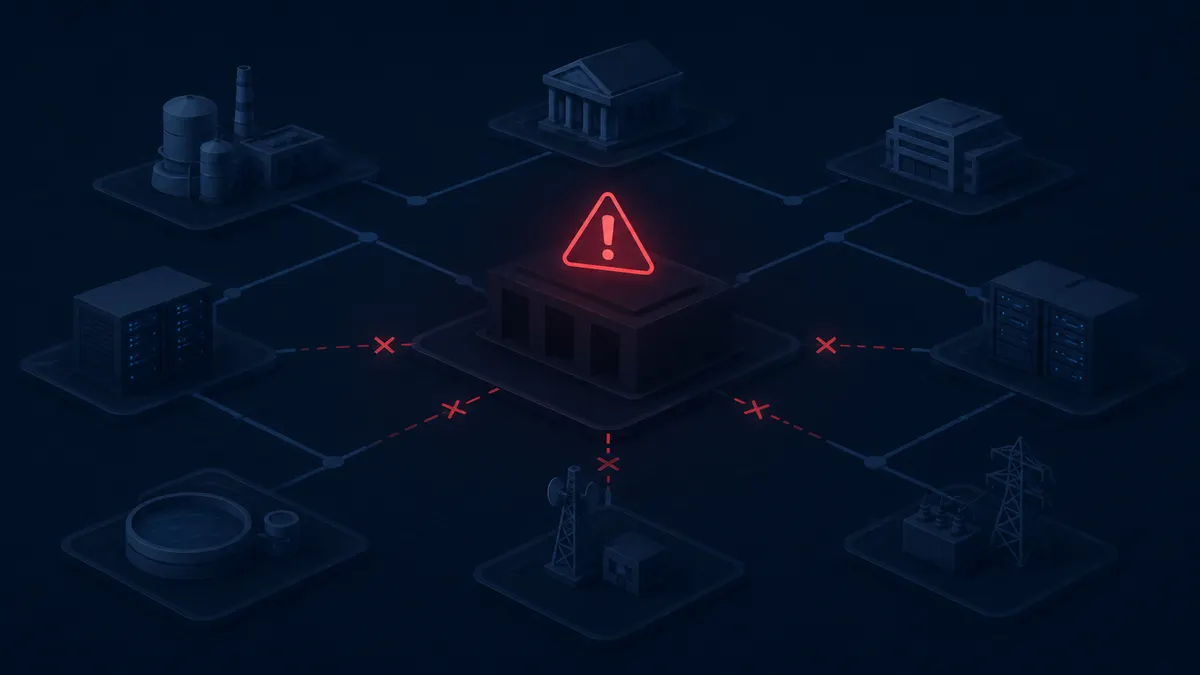
According to a recent report by The Hacker News, a security vulnerability has been discovered in Ruflo, an open-source implementation of the Model Context Protocol (MCP). The flaw allows unauthenticated attackers to execute arbitrary commands and tamper with the session memory of AI agents, thereby influencing their subsequent decision logic. No official patch has been released yet, and no timeline for a fix has been provided.
Background: What Are MCP and Ruflo?
MCP (Model Context Protocol) is a communication protocol that connects AI agents with external tools such as databases, payment systems, and APIs. It defines how agents send requests, how tools return results, and how session context is maintained. Ruflo is a popular open-source library that implements this protocol and is widely integrated by AI application developers.
Vulnerability Type: Command injection + memory poisoning. Attackers can send specially crafted MCP requests to execute arbitrary system commands on the server side and directly manipulate the AI agent's in-memory session data.
Affected Versions: The report does not specify the exact affected version numbers. The Ruflo GitHub repository may already contain related issues or security advisories.
Discoverer: The public report does not mention the discoverer or the security team.
Attack Impact and Risks
As AI agents increasingly participate in sensitive business processes such as payment authorization, fund instruction forwarding, and contract review, MCP serves as a critical channel between agents and tools. Its security directly impacts the trustworthiness of the entire system.
Attack Scenario Examples
- Bypassing Compliance Checks: By executing commands, an attacker can directly modify a payment gateway's return value, causing malicious transactions that should have been blocked by KYC/AML or settlement systems to be flagged as "compliant."
- Falsifying Historical Interactions: By poisoning session memory, attackers can fabricate past user instructions or system responses, leading the AI agent to make incorrect decisions based on false context. For example, tricking the agent into believing a transfer was already approved.
- Lateral Movement: If the MCP server is connected to other internal services, the command execution vulnerability could be exploited for lateral penetration.
Risk Scope
OceanAlt believes the actual risk depends on the specific deployment:
- If the Ruflo service is exposed to the public internet without authentication, it is highly susceptible to mass scanning and exploitation.
- If deployed on an internal network with firewall protection, but the AI agent is involved in high-value operations (e.g., automated payments), threats from internal attackers or SSRF bypass still exist.
It is important to emphasize that MCP session memory poisoning represents a novel attack surface. Traditional API security often focuses only on request validation, ignoring the risk of tampering with the AI agent's own "memory."
Industry Implications
This incident once again demonstrates that in agent-based payment infrastructure, the communication layer and the settlement layer must be hardened separately. A single security measure is insufficient against such threats.
Specific Recommendations
- Communication Layer: Implement MCP request signing and mutual TLS authentication to ensure only authorized agents can make calls.
- Session Layer: Apply integrity checks (e.g., HMAC) to session memory data. Any tampering should trigger an alert and reject poisoned data.
- Application Layer: Add a secondary confirmation mechanism for critical business logic (e.g., payment approval) to prevent a single MCP call from directly causing fund movement.
- Supply Chain: Enterprises should establish a dependency audit mechanism for open-source MCP implementations, monitor upstream security advisories, and consider using sandboxing to isolate MCP services.
Industry Chain Relationships
From an industry chain perspective, this vulnerability involves the following nodes:
- Upstream: MCP protocol standard setters (e.g., Anthropic, OpenAI, and other companies actively promoting the AI agent ecosystem) — the protocol's security design imposes certain constraints on implementations.
- Midstream: The Ruflo maintenance team and developers of other MCP implementations (e.g., in Go, Python, etc.) — vulnerability fixes and security updates depend on them.
- Downstream: AI application developers that integrate Ruflo, and enterprises (finance, healthcare, e-commerce, etc.) that use these AI agents — they are the ultimate affected parties.
OceanAlt assesses that this vulnerability highlights the fragility of AI infrastructure supply chain security. A flaw in a popular open-source library can affect hundreds of commercial applications with potentially long remediation windows. The industry should promote security grading certification for MCP implementations or establish a rapid CVE response mechanism.
Verifiable Public Information
- The vulnerability details first appeared in a report by The Hacker News.
- As of the knowledge cutoff date, no patch has been released in the Ruflo official repository.
- Similar security risks have been discussed in other MCP implementations (e.g., modelcontext/servers), but a full technical analysis of Ruflo's specific vulnerability has not yet been made public.
Provenance & status
- Byline
- OceanAlt Editorial
- First published
- 2026-07-30
- Last updated
- 2026-08-14
- Content type
- Newsflash
- Source material
- View original ↗
Related reading

Visa and Mastercard Join Ant International on a KYA Interoperability Framework as Agent Identity Standards Begin to Converge

Félix Raises $200M Led by a16z: Stablecoin Infrastructure Shifts from Remittances to Agent Economy Settlement

U.S. Congress Holds First Hearing on AI Agent Payment Rules: Authorization, Settlement, and Identity Take Center Stage
Paste a payee address before you pay and see whether it's on a sanctions list, through a mixer, or tagged for fraud.
This judgement can sit inside your own product
One line of code; it touches neither your CSS nor your JS. The same pre-settlement judgement can appear in your articles, on your wallet's confirmation screen, or as an endpoint your agent calls before it pays.