

What Binance's Security Incident Reveals About AI Payments: Just Because You Can Execute, Should You Pay?
The Binance security incident reminds the market that the absence of direct private key theft does not mean there are no risks in the fund execution environment and business authorization. Today, RMB, USD, and EUR payment systems process hundreds of millions to billions of non-cash transactions daily, while on-chain transfers of USDT and USDC have reached tens of millions per day. Facing higher-frequency, more automated payments, OceanAlt explores adding an independent trust judgment before payment through KYA, authorization limits, payee risk screening, and verifiable decision evidence.
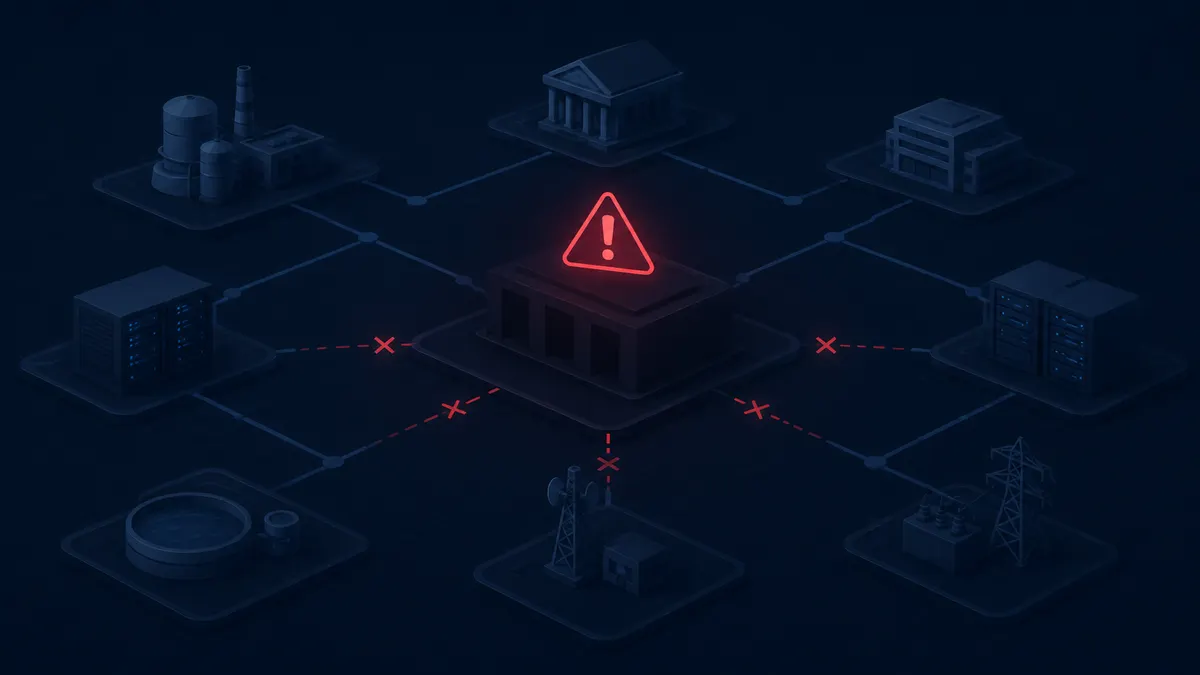
On October 29, 2026, global crypto asset trading platform Binance disclosed a major security incident involving abnormal fund transfers from multiple wallets, with institutions such as Tether and Circle participating in freezing the affected assets. On October 30, Binance published preliminary investigation results: the incident may have begun with the compromise of an operations engineer's computer, after which the attacker entered service containers and submitted unauthorized withdrawal transactions. Binance stated that no evidence of wallet private key leakage has been found so far. Some on-chain research mentioned EIP-7702 (account code delegation mechanism); the specific attack path still awaits a complete technical review.
This incident raises a question worthy of attention across the payments industry: even if a transaction meets the technical conditions for execution, it may not align with the fund owner's true payment intent. As AI Agents begin to make autonomous purchases, invoke services, and make payments on behalf of enterprises, this risk boundary will become increasingly important. And the growing scale of payments makes the issue more urgently relevant.
I. From Hundreds of Millions of Payments to Hundreds of Billions of Agent Transactions: Can Risk Control Keep Up?
Today's payment systems already handle extremely high-frequency fund activity. Based on different sources from central banks, payment industry statistics, and on-chain data platforms, here are representative figures to help understand the order of magnitude:
- RMB: China's banking system processed approximately 1.85 billion non-cash payments per day in Q2 2026, corresponding to a nominal transaction value of approximately RMB 18.66 trillion per day.
- USD: Core non-cash payments in the United States in 2024—including cards, ACH, and checks—totaled approximately 646 million per day, with a transaction value of approximately USD 382.5 billion per day, excluding wire transfers.
- EUR: Non-cash payments in the euro area in the first half of 2025 totaled approximately 429 million per day, with a transaction value of approximately EUR 640.9 billion per day.
- JPY, GBP, and HKD: The respective retail cashless or card statistics listed in the document are approximately 119 million, 91.68 million, and 4.86 million per day; their coverage is narrower and cannot represent all payments in these currencies.
- Digital RMB: Monthly business volume in September 2026 was approximately 99.67 million transactions, equivalent to approximately 3.32 million per day.
- USDC and USDT: A 24-hour snapshot from Artemis around October 30, 2026 showed approximately 26.30 million and 25.28 million on-chain transfers, respectively, corresponding to transfer values of approximately USD 63.86 billion and USD 56.29 billion.
These are not same-basis "global payment counts by currency." The first three groups measure non-cash payments in specific economies; JPY, GBP, and HKD use narrower proxy measures; USDC and USDT measure on-chain transfer events, including exchange consolidations, smart contracts, and bot operations.
More noteworthy is the future demand for new automated transactions. In August 2026, Juniper Research forecast that global commercial transactions involving AI Agents will grow from approximately 620 million per year in 2026 to approximately 120 billion per year by 2031, about 193 times the current forecast; its research page published in April 2026 also predicted that the related annual transaction value will grow from approximately USD 8 billion in 2026 to approximately USD 3.5 trillion by 2031. This means that, based on the forecast, global agent commerce in 2031 could reach an average of approximately 329 million transactions per day, involving an average daily transaction value of approximately USD 9.6 billion.
Juniper's research also specifically emphasizes that for enterprise-grade agent commerce to succeed, it must have auditable, explainable purchasing decisions, clear human authorization intent, and limit controls consistent with corporate spending policies. This directly echoes the identity authorization, pre-payment decision, and signature evidence capabilities that OceanAlt is building.
Transaction growth itself does not mean security incidents will grow proportionally or exponentially; but if erroneous authorization, phishing pages, or malicious payee information enter high-speed automated pipelines, a single vulnerability could be invoked repeatedly before humans detect it, causing greater risk exposure.
Machine payments are getting faster, and security cannot only catch up after payment; it must become a judgment callable before every automated payment execution. But being fast enough is not enough. The more fundamental question is: does a payment that is technically permitted to execute truly comply with business authorization?
II. Technical Executability Does Not Mean Business Desirability
Digital signatures, identity authentication, and system permissions are the foundation of fund security, but they cannot alone confirm that the payee is correct, the amount is reasonable, or the business purpose is genuine. For example, a procurement Agent may hold valid credentials but receive a tampered payment instruction; a supplier's identity may be genuine, but the payment address may suddenly be replaced; a transaction format may be correct, but the payment page may be a phishing site.
One-time human authorization also has limitations: the authorizer cannot foresee all risks of every future transaction, and long-lived permissions are more likely to be abused by accidental instructions or a compromised execution environment.
The identity may be real, the authorization may be valid, but the payment at hand may still be one that should not happen.
III. From KYA to Pre-Payment Trust Decisions: What Does OceanAlt Solve?
KYA (Know Your Agent) is becoming an important part of AI payment security. Different solutions have different focuses: some focus more on the Agent's identity, ownership, and credentials, while others also cover delegated authorization and transaction policies.
OceanAlt's differentiated direction is to connect three layers:
The first layer: confirm who the Agent is. Verify identity, invocation credentials, and the authorization entity they represent.
The second layer: confirm what the Agent can do. Check authorization status, per-transaction limits, daily cumulative limits, payee whitelists, and established rules.
The third layer: determine whether this money should be paid. Further check whether the payee address involves known sanctions or fraud risks, whether the payment page is phishing, whether the payee has changed abnormally, and whether the available evidence is sufficient to support approval.
OceanAlt's core value is not to add an identity label to an Agent, but to connect identity, authorization, payee risk, and the specific payment.
IV. How Does OceanAlt Provide Security Judgment Before Funds Move?
OceanAlt is building a Pre-Payment Trust Decision Layer for AI Agent payments. It does not hold funds, manage customer private keys, or settle on behalf of banks, wallets, or payment institutions. Instead, through APIs and other means, it provides the following checks to integrators:
- Identity and authorization: Verify Agent identity, authorization status, and per-transaction and cumulative limits.
- Payee risk: Check sanctions, anti-money laundering (AML), known fraud, and other high-risk signals.
- Payment environment: Check for phishing sites, lookalike domains, and suspicious payment requests.
- Payee continuity: Check whether there is verifiable authorization basis when the same supplier or the exact original site changes its payment address.
- Evidence and uncertainty: When risk data is missing or sources cannot be confirmed, do not mistake "no risk found" for "already safe."
After checks, it returns Allow, Review, or Decline, optionally with source, timestamp, and signed decision credentials. OceanAlt provides decision support; whether to actually pay is executed by the integrator according to its own policies.
V. From AI Agents to Cross-Border Trade: Which Scenarios Need This Security Capability?
Cross-border e-commerce and international procurement. When a supplier suddenly changes its payment address, OceanAlt can combine the payment request, existing payee relationship, and on-chain risk signals to recommend review; traditional bank accounts still require payee and account verification services.
Cross-border payments and stablecoin settlement. Before supported on-chain transfers are executed, screen payee addresses for sanctions, fraud, and other known risks, supplementing payment institutions' existing risk control systems with evidence.
Anti-money laundering and payment compliance. Provide wallets and digital asset service providers with programmatically callable pre-payment risk checks, without replacing customer due diligence, ongoing transaction monitoring, and statutory reporting obligations.
Corporate treasury and automated payments. Constrain finance Agents' per-transaction limits, daily cumulative spending, payee whitelists, and payment context to reduce the risk of consecutive unauthorized payments.
x402 and machine-purchased services. When Agents frequently purchase data, model calls, or computing power, check payment authorization, service origin, payee address, and payment environment before execution.
What these scenarios have in common is: payment execution is becoming automated, and pre-payment trust judgment must not be absent as a result.
VI. Before Payment, During Anomalies, After Problems: OceanAlt's Three Layers of Value
Prevention before payment. Combine identity, authorization, limits, payee risk, and payment environment information to identify known anomalies as much as possible.
Review before execution. When Review or Decline is returned, the integrator can pause, review, or reject the payment according to established policies. Whether a transaction can actually be stopped depends on whether the check is completed before funds are transferred out and whether the integrator implements the decision.
Traceability and improvement after problems. Decision records, risk sources, and timestamped evidence can help enterprises reconstruct the judgment process at the time, analyze rule gaps, and improve subsequent risk controls. OceanAlt does not directly freeze, revoke, or recover settled funds.
In the AI Era, Payments Need Speed—and Trust
The Binance incident reminds us that digital asset security involves not only private keys but also the execution environment, permissions, transaction anomalies, and post-incident response. And as Agent payments expand from small service calls to cross-border procurement, corporate treasury, and international settlement, the frequency, speed, and overall scale of payments will push the timeliness of risk control to unprecedented importance.
OceanAlt does not claim to prevent all hacker attacks, nor does it replace underlying security infrastructure. It aims to add an independent, verifiable, and auditable pre-payment trust judgment between identity authentication, authorization, and payment execution: making normal transactions smoother, giving identifiable risks a chance to be discovered before funds move, and leaving traceable evidence for important decisions.
The payment infrastructure of the future must answer not only "can this money be paid" but also "should this money be paid."
OceanAlt — Trust Enables Autonomous Payments.
Let trust become the foundation of autonomous payments.
Website: https://oceanalt.com
Provenance & status
- Byline
- OceanAlt Editorial
- First published
- 2026-10-30
- Last updated
- 2026-10-30
- Source material
- Source not labeled
Related reading

Harbor Enters AI Agent Insurance With $10M Seed Round, Leaving Liability Attribution and Claims Pricing as the First Unsolved Problems
South Korea's President Confirms AI Role in Attacks on Seven Financial Firms: A Look at the Attack Chain
NVIDIA Open-Sources Agent Security Platform: Another Piece in the Agent Security Infrastructure, from Testing to Deployment
Paste a payee address before you pay and see whether it's on a sanctions list, through a mixer, or tagged for fraud.
This judgement can sit inside your own product
One line of code; it touches neither your CSS nor your JS. The same pre-settlement judgement can appear in your articles, on your wallet's confirmation screen, or as an endpoint your agent calls before it pays.