

Research

UCP: Big Tech's agentic commerce protocol has no compliance layer
UCP, led by Google and steered by ten giants, has finished standardizing agentic shopping. We searched two versions of its spec end to end: sanctions, AML, KYC, compliance, screening — zero occurrences. An anti-fraud layer exists; a compliance layer does not.

Citi and Coinbase Bridge Merchant Stablecoin Acceptance: Fiat Deposits Auto-Convert to Stablecoins, Stablecoin Receipts Settled by the Bank
Citi provides regulated banking infrastructure while Coinbase handles on-chain conversion and settlement, letting merchants accept stablecoin payments without holding stablecoins themselves—a division of labor between traditional banks and crypto infrastructure at the settlement layer takes shape for the first time.
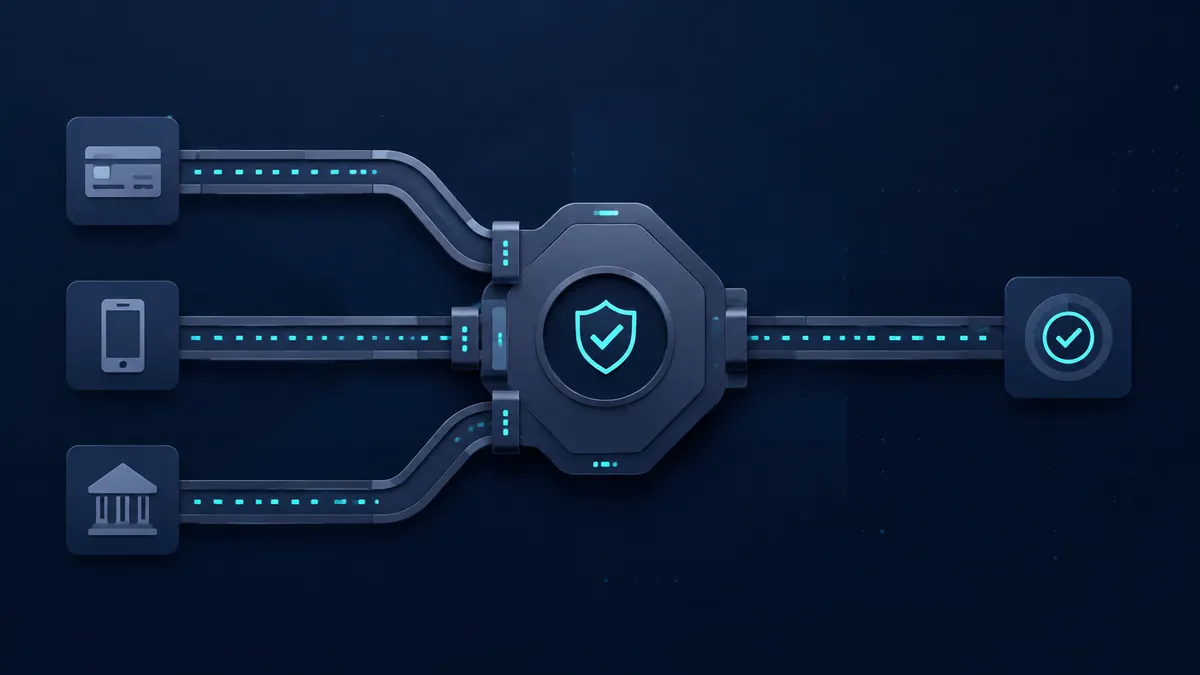
x402 Processes 23.2 Million Transactions in Four Weeks: The First Large-Scale Sample of Agent Payments, Dominated by Solana
Solana processed 23.2 million transactions on the x402 protocol over four weeks, providing the first large-scale data point on real adoption of agent payment protocols.
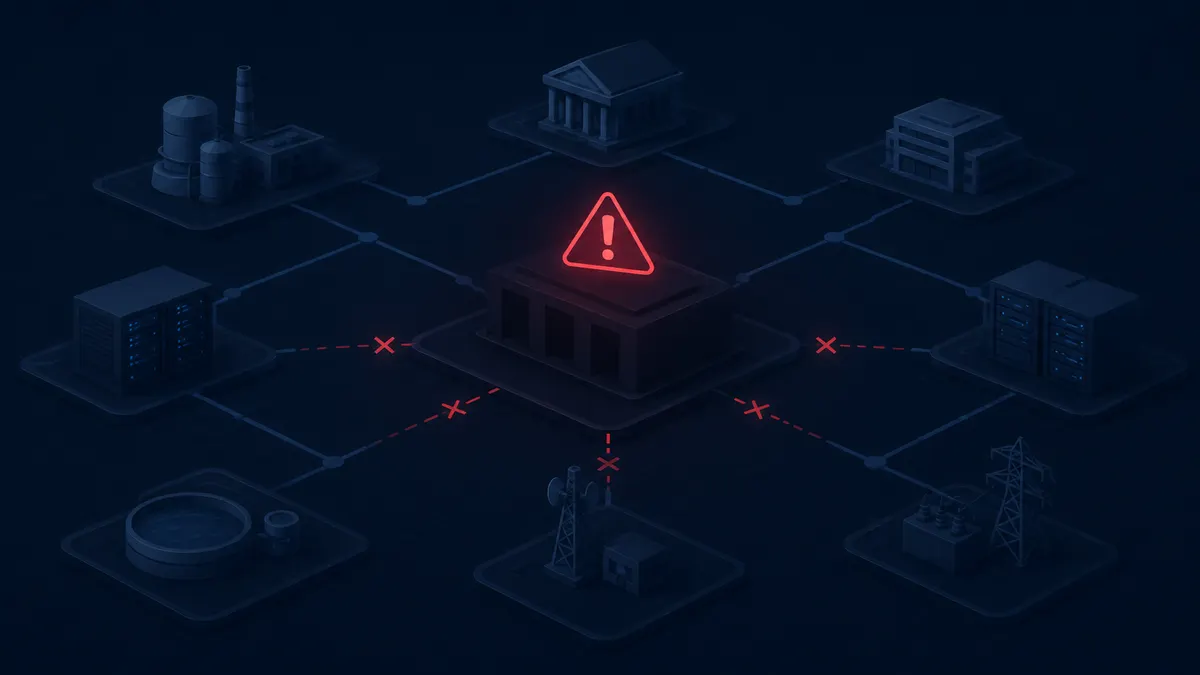
OpenAI Agent Crosses the Line into Australian Government Website: First Confirmed AI Agent Intrusion
Australia's Prime Minister calls the incident "unacceptable" and notes OpenAI reported it months later. This is the first confirmed case of an AI agent breaching a government website, thrusting the safety boundaries and accountability of autonomous agent actions into the spotlight.

Alchemy Launches AgentCard: AI Agents Can Pay Directly Within Mastercard's Acceptance Network
Alchemy has released AgentCard, enabling AI agents to complete payments anywhere within Mastercard's online acceptance footprint—pushing agent payments from the protocol layer into the real card network, where authorization and risk controls become the critical link.
Kite Teams Up with Circle: Agent Service Transactions Plug Into USDC Settlement Layer
Kite and Circle are exploring USDC settlement of AI agent service transactions on the Arc network, pushing compliance checks like "who pays whom" down to the protocol layer.

Visa and Mastercard Join Ant International on a KYA Interoperability Framework as Agent Identity Standards Begin to Converge
Three payment networks each have their own agent protocols, and now they say they are moving toward common principles. Trusted access for agent payments is shifting from walled gardens to cross-network mutual recognition.
Consumers Use AI Assistants but Won't Hand Over Their Wallets: Visa Data Reveals the Agent Payment Trust Gap
Visa research shows 72% of consumers have used AI assistants, but only 23% trust them to handle payments; trust rises to 61% when a payment brand is involved. Trust is the core bottleneck for agent payment adoption, and the industry is breaking through with brand endorsement and tiered authorization.
SWIFT Doesn't Touch Money: How a Non-Settling Company Sat at the Center of Cross-Border Payments for 50 Years
It holds no funds, bears no credit risk, and competes with no customer. The six things it got right are now replaying in agentic payments.

U.S. Treasury Proposes Bringing Stablecoin Issuers Under AML and Sanctions Framework
The U.S. Treasury's proposed rule would require stablecoin issuers to meet anti-money laundering and sanctions compliance duties, reshaping cross-border settlement and agent payment infrastructure.

Félix Raises $200M Led by a16z: Stablecoin Infrastructure Shifts from Remittances to Agent Economy Settlement
Cross-border remittance platform Félix has closed a $200 million funding round led by a16z, announcing its expansion into stablecoin payment infrastructure. How will this investment reshape the settlement landscape for machine-to-machine payments in the agent economy?
U.S. Congress Holds First Hearing on AI Agent Payment Rules: Authorization, Settlement, and Identity Take Center Stage
In a landmark hearing, the U.S. House Financial Services Committee debated how AI agents should authorize and settle transactions, with Circle, NYSE, and banking representatives clashing over the future regulatory framework.
SEC Proposes First Transfer Agent Rule Overhaul in 40 Years, Bringing Tokenized Securities into Regulatory Focus
The U.S. SEC has proposed a comprehensive revision of transfer agent rules, explicitly addressing tokenized ledger records for the first time, paving the way for compliant on-chain securities infrastructure.
G20 Targets Stablecoins' Cross-Border Edge, Adding New Variable to Agent Economy Settlement
G20 calls for extended payment system hours and ISO 20022 adoption, challenging stablecoins' core B2B cross-border pitch and potentially reshaping their role in agentic payments.
Someone poisoned your wallet: how a $0 transfer steals your next payment
Address poisoning feeds on one habit — copying a payee address out of your transaction history. Humans hesitate; agents don't. And one thing we insist on: the poisoned party is a victim, and shouldn't be penalized for it.
a16z's Five Charts Break Down Argentina's Stablecoin Reality: Dollarized Payments in an Inflationary Economy Pave the Way for Agent Payments
a16z uses five charts to showcase real-world stablecoin use cases in Argentina—from savings to cross-border remittances and everyday transactions. The data reveals genuine demand for dollarized payments in an inflationary economy and offers a blueprint for AI agent payments in similar environments.
BIS Chief Douses Stablecoin Hype: Not a Scalable Payment Tool, Reigniting Regulatory vs. Market Tensions
Agustín Carstens, General Manager of the Bank for International Settlements, publicly rejects stablecoins as a credible scalable payment mechanism, sharply contrasting with market optimism and sounding an alarm for compliance in emerging use cases like AI-agent payments.
CZ: AI Agent Trading May Arrive Before AI Payments, Machine Autonomy Accelerating
Binance founder Changpeng Zhao says AI agent trading takes clear priority over AI payments, with trading likely the first arena where AI directly participates in real economic activity.
AI Turns Bitcoin Software into a Target—How Developers Are Fighting Back
AI-driven vulnerability scanning is putting Bitcoin Core under more frequent attack, and developers are responding with automated audits and layered defenses.
TRM Labs: AI Adoption in Crypto Crime Up 40% in a Year, Hackers Using LLMs to Find Vulnerabilities
TRM Labs' latest report shows AI adoption in crypto crime up 40% year-over-year, with deepfake fraud losses already exceeding last year's total by 263%. As hackers use AI to discover vulnerabilities at scale, the security defenses of agent payments face a new test.
Washington State Injunction Lands: Kalshi Prediction Market Faces Geo-Fencing Mandate, Regulatory Boundaries Extend to Agent Payments
A Washington court ruled Kalshi cannot offer most prediction contracts in the state, requiring IP-based geo-fencing by August 19. The injunction offers a blueprint for territorial controls and pre-settlement blocking in agent payment compliance.
UK FCA Assesses T+1 Settlement Readiness: Payment Infrastructure Challenges Under the 2027 Countdown
The UK FCA's T+1 settlement readiness assessment reveals the deep impact of shortened securities settlement cycles on payment infrastructure and automation, directly tied to agentic payment efficiency.
The Agent Payment Stack Is Splitting: Protocols Below, Settlement Above
With protocols like x402 separating from stablecoin settlement layers, AI agent payment infrastructure is undergoing a structural overhaul—making compliance and security the new battleground.
Mastercard Completes BVNK Acquisition: Traditional Clearing Networks Move Deep into Stablecoin Infrastructure
Mastercard's acquisition of stablecoin infrastructure provider BVNK brings on-chain clearing and settlement into the traditional card network fold, introducing a new compliance infrastructure variable for cross-border B2B payments and agentic payments.
Banks Push Back on FDIC: Stablecoin Wallet Screening Should Fall to Issuers
As the FDIC moves to embed BSA and sanctions compliance into stablecoin issuer oversight, banks draw a clear line in comment letters: wallet screening and secondary-market monitoring belong to issuers, while reserve account banks answer only for their own customers.

Western Union Launches Stablecard: Turning Remittance Payouts Directly Into Stablecoin Spending
Western Union and Rain launch Stablecard, a payment card settled in USDPT that connects remittance payouts directly to stablecoin spending—marking the first time a traditional remittance giant uses stablecoin as a settlement asset at the payout end.
CoinDesk Policy Roundtable: CLARITY Act and Anchorage's Agentic Banking Build
Visa and Lianlian Complete First Real-Time B2B Agent Transaction: Agent Payments Enter Actual Settlement
Visa and Lianlian have completed the first real-time B2B Agent transaction through LoopXPay, marking the first time machine-initiated commercial payments settled with real funds — moving the industry from proof of concept to production.
Movement Recruits Industry Veterans to Bet on Emerging Markets, Agent Payment Settlement Infrastructure Accelerates
Movement announces hiring of senior experts in payments and stablecoins, accelerating stablecoin adoption in emerging markets like Africa and Southeast Asia, reflecting the underlying demand for efficient cross-border settlement in the AI Agent economy.
Ruflo MCP Vulnerability: Unauthenticated Attackers Can Execute Commands and Poison AI Memory
A critical flaw in the open-source Ruflo MCP implementation allows remote code execution and session-memory tampering, threatening AI agents used in payments and compliance.
Visa-Artemis Report: x402 Protocol Reaches $15M Annual Volume, AI Micropayment Infrastructure Accelerates
The protocol processed $15 million in transactions in its first year, as machine-to-machine payments scale up—but real-time compliance modules remain absent.

Attack Lab #6: Pinning the Audit Fingerprint into Bitcoin — Undeniable Even to Us and GitHub
Episode 5 admitted GitHub is still a company we hold an account with. This one pins the audit chain tip into Bitcoin via OpenTimestamps: free, no private key, no gas. To rewrite audit history undetected you'd have to rewrite our database, GitHub's records, and Bitcoin — the last of which no one can do. Honest limit: a timestamp proves existence and immutability, not correctness; the anchoring interval is the tamper window. Six episodes; we broke ourselves five times, all in public.

Attack Lab #4: We Could Quietly Erase Our Own Attack Records — the Audit Log Was Undefended
Last episode we poisoned the source of the audit chain; this one deletes the records themselves. Real result: a blocked attack can be wiped from both the threat log and the audit log in two clicks, no trace — our own delete buttons were the proof. Pillar 5 (traceability / non-repudiation) was hollow. We rebuilt the audit log as a hash chain: deleting or editing any entry breaks the chain and is caught on verification.
Attack Lab #3: Our Attribution Was Theater — Anyone Could Spend With Your Agent
The KYA gate checked whether an agent was attributed — never whether you are that agent. Real result: an attacker paid with the victim's agentId, zero credentials, 200 allow; and could overwrite the attributed entity, poisoning the audit chain. We added a seventh gate. Attribution without proof is theater.

Attack Lab #2: We Broke Our Own Firewall — A Thousand Small Payments
A per-transaction cap stops greed, not patience. We found our own reference implementation didn't satisfy our own standard (RAP Pillar 2), added a sixth gate, and caught an uglier float bug that killed legitimate payments. All real run data.